
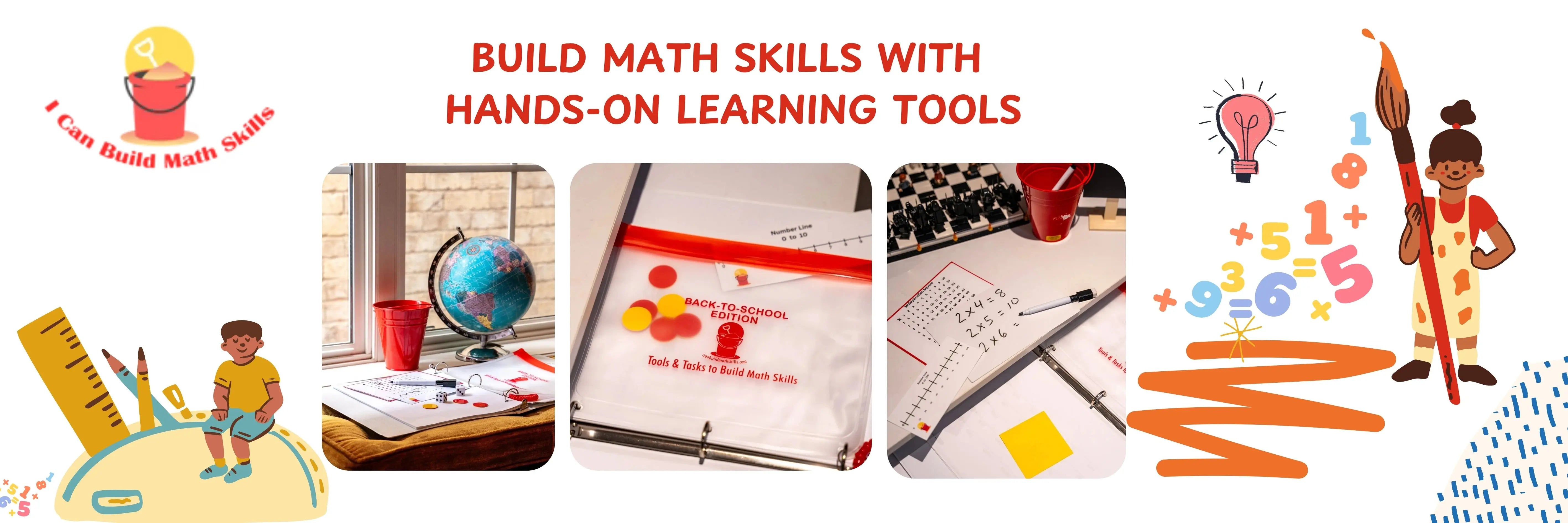


The Ultimate Guide to Tools for Teaching Math in Elementary Grades
Share
For many young learners, math can feel intimidating filled with numbers, symbols, and concepts that seem abstract or confusing. That’s why teachers and parents play a crucial role in making math interactive, fun, and easy to understand. Using the right tools for teaching math transforms ordinary lessons into exciting learning experiences.
Whether through colorful manipulatives, interactive apps, or creative games, these tools bring math to life.
Why Using the Right Tools for Teaching Math Matters
Children learn best when they can see, touch, and experiment with ideas. That’s exactly what the right tools for teaching math do they turn abstract concepts into tangible learning moments.
Visual aids, manipulatives, and technology-driven resources help simplify complex topics like place value, fractions, or geometry. When students can physically engage with objects or see visual patterns on a screen, their understanding deepens.
Moreover, math tools promote active learning students don’t just memorize formulas, they explore and apply them. This hands-on engagement fosters confidence, problem-solving skills, and a love for learning that extends beyond the classroom.
Hands-On Tools for Teaching Math in Elementary Grades
Hands-on learning is one of the most effective ways to teach math. It encourages exploration, teamwork, and curiosity.
Counting Cubes and Base Ten Blocks
These classic tools help students understand number relationships, addition, subtraction, and place value. Ideal for grades K–3, they make abstract ideas like regrouping or decimals easy to visualize.
Number Lines and Charts
Perfect for sequencing, skip counting, and simple operations. They help students see the logical flow of numbers and improve mental math skills.
Fraction Circles and Bars
Fractions can be tricky but with colorful fraction circles or bars, students can compare parts of a whole visually, making concepts like equivalent fractions more accessible.
Play Money and Clocks
Teaching real-world math becomes fun with these tools. Students can practice making change, telling time, and budgeting essential life skills that tie math to everyday experiences.
Hands-on tools for teaching math help students connect classroom lessons with real-world understanding through tactile engagement.
Digital Tools for Teaching Math
In today’s classrooms, technology plays a vital role in math education. Digital tools for teaching math make learning interactive and adaptable for different levels.
Interactive Math Apps
Apps like Prodigy, Khan Academy Kids, and SplashLearn use games and challenges to teach everything from basic addition to geometry. Gamified learning keeps children motivated while tracking their progress.
Smartboard and Tablet Activities
Collaborative digital activities promote teamwork and problem-solving. Teachers can use smartboards to demonstrate lessons in real-time, letting students actively participate in group exercises.
Online Math Games and Quizzes
Web-based platforms offer instant feedback, helping students learn from mistakes immediately. Regular quizzes also build retention and reinforce daily lessons.
Digital math tools not only enhance engagement but also support personalized learning giving each student the chance to learn at their own pace.
Creative and Play-Based Math Teaching Tools
Math doesn’t have to feel like work. Puzzles, dominoes, dice games, and storytelling activities can make it exciting and approachable. For instance, teachers can design a “math scavenger hunt” or use LEGO blocks to teach geometry.
Play-based tools for teaching math encourage imagination while reinforcing logical thinking. When children play, they naturally explore patterns, quantities, and problem-solving key components of mathematical thinking.
How to Choose the Right Tools for Your Classroom
Selecting the best math tools depends on your students’ grade levels, abilities, and classroom goals. Keep these factors in mind:
- Student Age & Skill Level: Younger children benefit from visual, tactile tools like blocks and shapes, while older students may prefer digital simulations.
- Curriculum Alignment: Match tools to learning goals such as measurement, geometry, or algebra readiness.
- Balance: Use both digital and hands-on methods to keep lessons dynamic.
- Durability & Budget: Choose affordable tools that can withstand daily classroom use.
Teachers can easily adapt tools for teaching math to support diverse learning styles visual, auditory, and kinesthetic.
Tips for Making the Most of Math Teaching Tools
- Integrate math tools into daily lessons, not just special activities.
- Encourage independent exploration with manipulatives and math kits.
- Alternate between group and solo practice to develop teamwork and self-discipline.
- Rotate math tools regularly to keep curiosity high and avoid monotony.
Consistency is key using math tools frequently helps students internalize concepts and gain long-term understanding.
Building Confidence Through Math Tools
The right tools for teaching math transform how students learn, think, and engage with numbers. They make math tangible, interactive, and enjoyable helping children see math not as a challenge, but as a skill they can master.
When students explore math with their hands, eyes, and imagination, they build confidence and lasting curiosity. By combining creativity, structure, and technology, teachers can create classrooms where every child feels capable of success.